More Will to Live: Will Smith Could Be the Next Guru
Looking for motivation to walk the last two miles to get home, I searched through Audible samples on my phone. I sampled Tolle and then books on business and wealth, and kept overlooking “Will,” the recommended book on my screen for weeks. Despite how much I love Will Smith movies, I care little about what’s going on in the life of the rich and famous. I wanted something to keep me grounded while promoting the new book that I hope to make me an influencer in mental wellness.
Tolle is always grounding but offered no distraction from my fatigue. I had run 3.5 miles to the gym to get in a 30-minute lift and was walking back home. This day was the first time trying that fitness routine, and my body was letting me know what I try to disregard daily — I’m 59 years old. I needed something that would take my mind off my legs, which felt like lead. I’d listened and read so much Tolle that I could almost predict his words. Money and business books felt obligatory rather than inspiring. So, I had no hope that they would relieve the pain that was starting to shoot across my lower back. So, I decided to try something out of the ordinary. I clicked on the sample of “Will.”
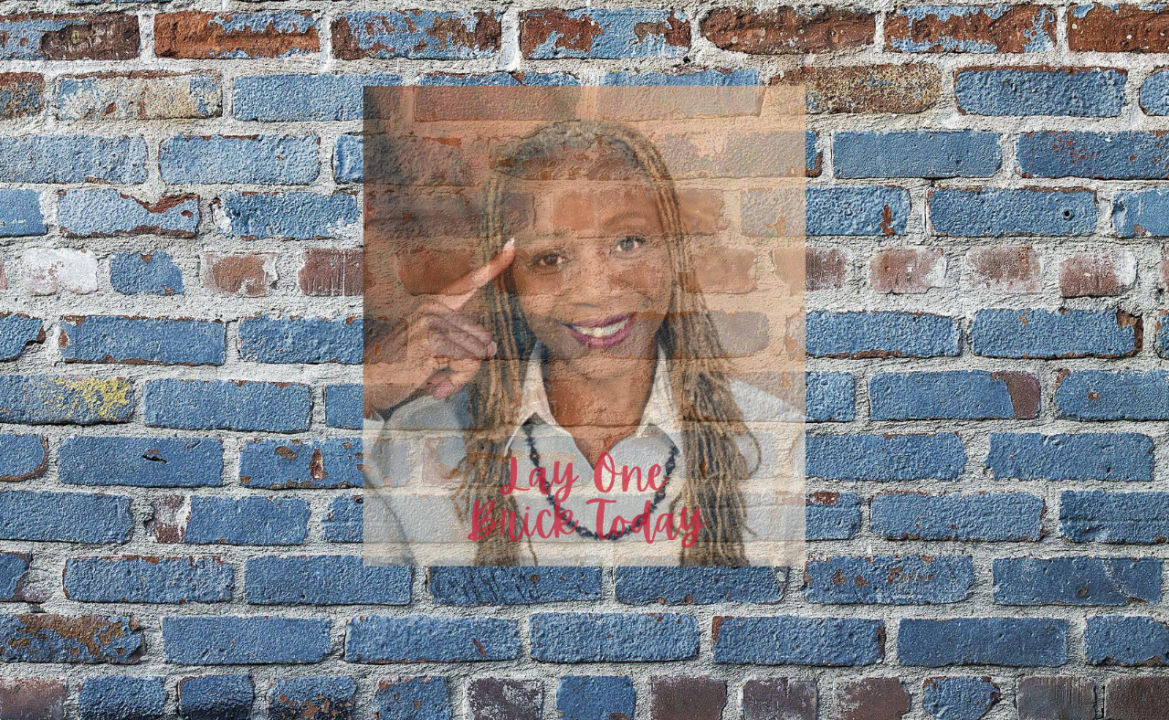
The 5-minute sample told a story about Will and his brother building a brick wall as teenagers at the order of their father. When Will and his brother complained about the difficulty of building the wall, their father demanded them to “stop worrying about the wall — there is no wall!” Their job was to lay one brick perfectly. Then pick up another brick and do the same, the father insisted. The moral of the story was to work consistently and not focus on the outcome. Will tells the story eloquently, but he could have told it sloppy, and I would have valued it just as much because this is the principle I live by, albeit wearily when I don’t get the outcome I desire. Put in the work and trust, don’t demand the outcome. The book is about the bricks Will Smith has laid every day of his life.
I’m All In
I immediately used my monthly credit to order the book, regretting that I now only had 30 minutes left before I’d arrive home. Will starts his biography with unexpected vulnerability and transparency that made me remember that Jada is his wife. She supports Hollywood stars in their most vulnerable moments on her Facebook series, “Red Table Talk.” I admire her work, and think surely, she has supported her husband in this project. Regardless, I’m hooked on Will Smith’s vulnerability.
The blockbuster actor and rap star opens with a confession to the reader that the Will they know is a constructed character. He then explains the most significant pain of his life (no spoilers here.) He tells the good, the bad, and the ugly of his family life and growing up in Philadelphia, my hometown as well. Will’s story-telling isn’t about pity, though. His telling has a purpose. There is something he wants the reader — the world — to understand. It’s something that psychologists like myself keep trying to teach. What happens to us in childhood matters — it matters deeply.
Success is one response to trauma. It’s the response that keeps us claiming the lie that pain makes us stronger. Will’s story reminds us that success doesn’t take away the pain. It only makes the pain invisible to others. All the accolades come from making pain invisible. We refer to the hidden pain as resilience, without ever asking the survivor what is underneath.
For every adult who experiences resilient success, many more adult survivors of adverse childhood experiences show their pain through social or mental decomposition. Through illness, underachievement, promiscuity, or drug use, they fall between the cracks because no one asks them, as Oprah and Bruce Perry suggest, “What Happened to You?” Will’s story reinforces that what happens to you is important even when there is resilience.
Another poignant point in the book is that acts of love don’t negate induced fear. When children live in fear, how much love is shown to them simultaneously does little to avert the inevitable. Adult life remains dictated by the fear instilled years ago. How fear manifests will vary greatly, but it will manifest unwanted consequences. Will persuasively explains how his “personality” grew out of fear despite the love that surrounded him. Love attributed to resilience without releasing him from fear. The continuum for love is independent of the continuum for fear. Fear and love co-exist; you can experience both at the same time and from the same parent.
The coexistence of love and fear causes a child to develop insecurity, for which they must find a way to compensate. But, there is no way to compensate fully. “Will” underpins that the perpetual existence of fear can destroy parts of any person’s life no matter how much love they are shown or how successful they become. Will’s message can free many adults who still fear disappointing their parents.
So much of my empowerment work with clients is about offering permission for adults to revisit their childhood to find the etiology of their fear. Healing is 100% our responsibility, and part of that responsibility is understanding the early influences in our lives. The point is not to blame parents but to understand ourselves. Adults often stay stuck living out dysfunctional childhood patterns as an unwavering commitment to show their parents love and seek acceptance.
The Inner City Window
Will’s recollection of growing up in Philly in the late 70s is pretty similar to mine. His recall of the “Move Bombing” was jarring. I hadn’t heard anyone talk about that horrifying day since I was a child. I couldn’t stop listening to the book, even after getting home. I usually reserve my Audible listening for the pavement, sometimes taking weeks to complete a book. But, I was compelled to hear more of what felt like my story, not just Will’s. Not fitting in, his response to racism, the church influence, living under the entitled leadership of his father, and seeking approval through perfection were just a few points of connection.
Will’s anecdotes about the people, places, successes, and failures deliver powerful messages. The morals of the stories are clear. Still, he spells it out just in case you missed it. He reiterates the exact consequence, offering nuggets of wisdom for anyone who wants to live at a higher level. He masterfully sways between his arrogance and revealing his vulnerability.
For sure, he provides engaging education on the hip-hop era and the role his music played. He also gives plenty of life details for readers who want the Hollywood scoop. However, anyone who reads this book and comes away only knowing more about Will has missed the point. Ultimately, Will Smith has written a book about the good, bad, and ugly of life — all lives.
I wrote my memoir in 2018 with an arguably matched level of transparency and vulnerability. I hoped that breaking my silence about childhood sexual abuse would permit others to do the same. Freedom comes from living in the truth, even if pain comes with it. Will Smith has stepped into his truth and given us permission to do the same. Like most of us, he has come to the healing path kicking and screaming like a toddle on the playground with his diaper full of poop but doesn't want to get off of the swing. Now that he is here, I hope he can stay.
I have had nowhere near the success of Will Smith. However, I have my bragging rights as a 4th degree black belt, Ph.D., Ivy League graduate, 6X bestseller author, and a 30-year happy marriage. When I look at the statistics for adult survivors of childhood sexual abuse, I know I have surpassed my trajectory. Still, Will reminds me that I’m not done yet. I have more bricks to lay.